

Ready to kick off with PA?
The world is gearing up for this year's World Cup as FIFA gears up for a totally unique approach – the first to include 48 teams instead of 32, and the first to be hosted across three nations: Mexico, Canada and the United States.
Although many of the matches will be aired just a bit too late for our side of the pond to watch, we’ve still put together a campaign for you themed around the World Cup and how it relates to matters important to you: like antisocial behaviour, safeguarding, and tackling littering and bulk rubbish.
Keep checking back on this page to see what we cover as the campaign progresses from Monday 25 May – Friday 10 July!
Week One: Getting loud
-

It's a red card to noise nuisance!
Because of the time difference this World Cup, many of the matches will be taking place in the early hours of the morning.
As we kick off our World Cup promotions we're bringing you a refresh on noise nuisance: what it is, when to report it and how PA can support you if you’re dealing with it.
Residents should be considerate that any celebrations don’t cause excessive noise, but we also encourage trying to maintain a level of tolerance for these situations as it is not something our ASB team will investigate.
View


Week Two: Mental and physical wellbeing benefits of football
Week Three: Kickoff Week



Week Four: Tackling domestic abuse
-

Working together to tackle domestic abuse this World Cup
Did you know that domestic violence incidents increase by 38% when a World Cup game is lost, and by 26% even when it’s a win or draw?
We’re kicking off week three of our World Cup promotions, and this week we’re focusing on domestic abuse: spreading awareness, how to spot the signs and keep yourself safe, and how PA can support you if you find yourself a victim.
View


Week Five: Being a good sport against hate crime
-

Football is for everyone – be a good sport against hate crime
Did you know that globally, over half of football fans (54%) have witnessed racist abuse while watching a football game, but only 28% would know how to appropriately report such incidents?
This week in our World Cup campaign we’re talking hate crime: what it can look like and what to look out for, how you can get help and assist your neighbours if they find themselves a victim, and what PA has in place to support victims of hate incidents and hate crime.
View


Week Six: Antisocial Behaviour Awareness Week tie-in
-

World Cup 2026 x Antisocial Behaviour Awareness Week
From Monday 29 June to Sunday 5 July is ASB Awareness Week, and we’re tying it into our World Cup campaign by revisiting the most pressing issues that might arise during the tournament.
We’ll also be setting some expectations around bulk rubbish and reflecting on the work we’re doing to hopefully make you happier with our approach to handling ASB and making your voice heard.
View


Week Seven: Food from around the world
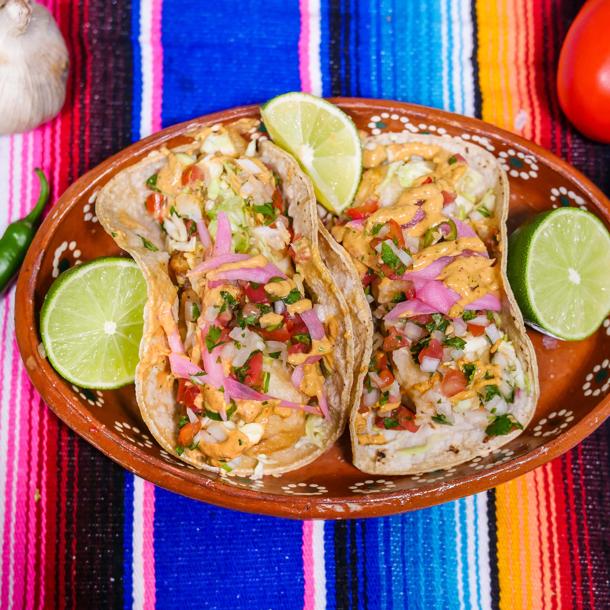
Tacos de pescado (fish tacos) originated in Baja California in Mexico, where they consist of grilled or fried fish, lettuce or cabbage, pico de gallo, and a sour cream or citrus/mayonnaise sauce, all placed on top of a corn or flour tortilla. In the United States, they were first popularized by the Rubio's fast-food chain, and remain most popular in California, Colorado, and Washington.
Ingredients (10 tacos)
- 4 tilapia or white fish fillets
- 10 corn tortillas
Fish batter
- 1 ½ cups of wheat flour
- 1 ½ tsp of baking powder
- 1 tbsp of Dijon mustard
- 1 egg
- salt and pepper to taste
- 1 tbsp of garlic powder
- 1 cup of beer
Spicy salsita
- ½ avocado
- 3 tbsp of cream or white butter
- 4 tbsp of mayonnaise
- ½ can of chile chipotle in adobo sauce
- 1 piece of cilantro
- 5 scallions
- the juice of 1 lemon
- 2 tbsp of vinegar
- salt and pepper to taste
- 1 tbsp of garlic powder
Toppings
- ½ cabbage or white cabbage, disinfected with 1 teaspoon of baking soda in 1 litre of water
- 1 tbsp of encurtido for each taco
- 1 tbsp of pico de gallo for each taco
Instructions
Toppings & salsa
- Make sure your encurtido and pico de gallo is ready (some encurtido is best after two days of marinating)
- To start, disinfect the cabbage. To do so, grate or slice the cabbage into thin slices. Then, soak it into 1 liter of water with a teaspoon of baking soda for 15 minutes. When the cabbage is ready, drain it thoroughly.
-
In your food processor put the mayonnaise, avocado, cilantro, scallions, lemon juice, vinegar, garlic powder, chile chipotle, salt, and pepper. Blend until you have a creamy but slightly chunky consistency.
Fried fish filling
- For the batter, first sift flour and add baking powder, garlic powder, salt, and pepper. Mix everything thoroughly.
-
Add one egg, mustard, and beer. Then mix the ingredients until you have a soft and consistent batter.
- Heat oil in a stockpot.
-
In the meantime, cut the fish fillets in smaller rectangles, like fish fingers.
-
Soak the fillets in the batter. Dip them well, so they are completely covered.
-
Use a bit of batter to test the oil temperature. When the oil is hot enough, start to fry the fish.
-
Putting the fish inside hot oil requires extra care. I use tongs to avoid burning my hands. Avoid dropping or throwing the fish in the oil, since it will splash.
-
Don't overfill the stockpot as you won't have enough space to move the fish inside the oil. A stainless steel drainer is useful to remove floating bits of batter. Remove them carefully. If they burn, they will add an unpleasant burnt taste to the fish.
-
After 7 to 9 minutes the fish will be ready. Let the fish drying on paper towels for a few minutes.
Building your fish tacos
- While the fish is drying, you can warm your tortillas in a hot pan. Don't toast the tortillas, as they will break when you fold them.
- Everything is set now! To build the tacos put the fish first. Then add the toppings: cabbage, pico de gallo, and encurtido. Finish with the delicious salsita and a hint of lemon juice.
- Enjoy!
Recipe source: Ensenada Style Fish Tacos Recipe [Tacos de Pescado] - La Cooquette
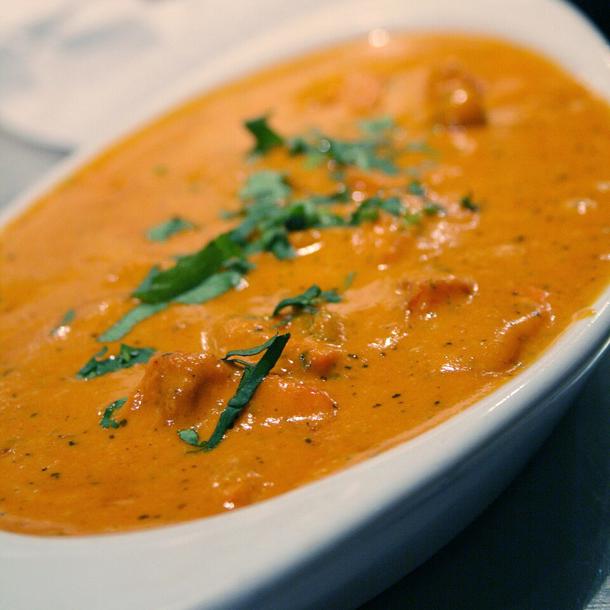
Chicken tikka masala is a curry consisting of roasted marinated chicken pieces (chicken tikka) in a creamy spiced sauce (masala). While it was thought to originate in Glasgow, it is one of the most popular dishes in the whole of Britain and has been described as a "true British national dish".
Ingredients
Marinade
- 1 large piece of ginger, peeled and chopped
- 3 garlic cloves, chopped
- 1 bird's eye chilli, chopped
- 1 tsp ground coriander
- 1 tsp ground cumin
- 1 tsp garam masala
- 1 tsp chilli powder
- 1 tsp ground turmeric
- 1 tsp salt
- 1 tsp ground black pepper
- 2 tbsp vegetable or olive oil
- 2 tbsp Greek yogurt
- 1 tbsp hot water
- 2 ½ lbs cubed boneless chicken meat (can be a mix of breast and thigh)
Sauce
- 3 tbsp vegetable or olive oil, plus extra
- 1 large onion
- 1 tbsp ground cumin
- 1 tbsp garam masala
- 1 tsp mustard powder
- 1 tsp ground paprika
- 1 tsp ground cinnamon
- 1 tsp salt, plus extra to taste
- ½ tsp pepper
- 1 large piece of ginger, peeled and chopped
- 2 garlic cloves, chopped
- 2-3 bird's eye chillies
- ¼ pt tinned chopped tomatoes
- ½ pt hot water (you may need more later)
- 3 bay leaves
- 2 tbsp to 2 fl oz double cream (optional)
- 4 cardamom pods, lightly bashed
Roti
- 10 oz plain flower, plus extra for kneading
- 1 tsp salt
- 2 tbsp vegetable oil, plus extra
- 6 fl oz warm water
Instructions
- Start by making the marinade. Place the chicken in a large bowl. Next, add the rest of the ingredients into a blender. Blitz until smooth and then gently rub the marinade into the chicken. Cover the bowl with clingfilm and set aside for at least 30 minutes.
- Make the sauce. Place a large pan over a medium heat. Add the oil and heat. Next, stir in the onions for 3 minutes. Add the spices and stir thoroughly scraping the bottom of the pan as you go, cooking for another minute. Next, stir in the ginger, garlic and chillies. Continue to cook for another 2 minutes whilst stirring frequently to avoid anything sticking to the pan. Add the chopped tomatoes, water and bay leaves and gently stir. Reduce to the heat to a simmer, cover the pan with a lid and leave to cook for 30 minutes. Stir every 10 minutes.
- After 30 minutes, remove the pan from the heat and carefully remove the bay leaves from the sauce – these can be discarded.
- Place a large frying pan over a medium-high heat and add a tablespoonful of oil. Once the oil is heated, add the chicken and cook halfway through. (Depending on the size of your pan you may need to cook the chicken in batches).
- If there is still marinade left in the bowl add to the pot with the sauce and cook through on a medium heat for 3 minutes. Pour the sauce into a blender and blitz until smooth. Pour the sauce back into the pan, stir in the cardamom pods, cream (to your liking) and 2 fl oz hot water. Place back on a medium heat.
- Add the chicken and its juices into the pot with the sauce. Add about 2-4 fl oz hot water if the sauce is too thick. Bring to a simmer and leave to cook for 15 minutes or until the chicken is thoroughly cooked. Season with more salt if necessary, then remove from the heat.
- Make the roti by combining all the ingredients together pouring a litter water at a time until you have a soft and slightly sticky dough. Knead on a lightly floured surface for 5 minutes. Divide the dough in 8 equal sized pieces and roll into balls. Lightly grease each ball with oil and place in a bowl. Cover with clingfilm and leave for 10 minutes.
- Place a large non-stick frying pan over a high heat. (This is where you need to work fast). Dip the dough ball into a bowl of flour until fully covered, then lightly pat down on a flat surface. Using rolling pin, roll the ball into a 6 to 7-inch round or until the dough is thin. Carefully lift the flattened dough into the dry frying pan and cook for 45 seconds on each side. Remove the roti from the eat and leave to sit on a plate and cover with tin foil to keep it warm. Repeat the process until you have 8 rotis.
- Gently heat up the curry and prepare the basmati rice.
- Serve the curry and roti with rice and a sprinkle of fresh coriander, and enjoy!
Recipe source: Chicken Tikka Masala from @neyskitchen | Spice Kitchen
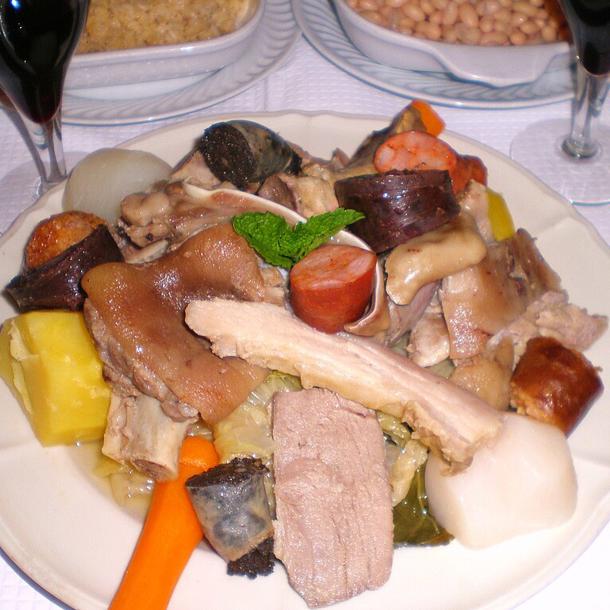
Cozido à portuguesa or Portuguese stew is a type of cozido, traditional Portuguese boiled meal. Numerous regional variations exist throughout Portugal - for example, in the São Miguel Island, Azores, a local version of the Cozido à Portuguesa is cooked underground with heat and steam coming from the volcanic phenomena in the area.
Ingredients (serves 6)
- 500g of beef
- 1 pig's foot
- 1 pig's ear
- 300g of pork cops
- 1 chouriço
- 1 meat chouriço
- 1 blood sausage
- 2 puddings (look for blood sausages such as Morcela or Moira)
- 1 rice pudding (a special type of blood sausage in which the stuffing also contains rice)
- 1800g of savoy cabbage
- 800g of Portuguese cabbage
- 2 turnips
- 4 potatoes
- 4 carrots
- 300g of rice
- 1 meat flavoured bouillon
- 1 chicken flavoured bouillon
- 1 vegetable flavoured bouillon
- Cooking salt (as much as you like)
- Cloves (as much as you like)
- 1 can of white kidney beans (cooked)
Instructions
- Put the 3 bouillons, salt, cloves, and the chouriço on a big pot with water and let them boil.
- Clean the meats (beef, pork chops, pigs foot, pig’s ear, and meat “chouriço”) and add them to the pot to boil.
- Once all the meats are cooked, remove them from the pot and plate them.
- Wash the vegetables and add them to the water that was used to cook the meat. Let them boil for 5 minutes.
- Add the rice pudding, the turnips, and the carrots after cutting them into quarters. Let them boil for 5 minutes.
- In the meanwhile add the rice and some of the stock from the meats into another pot. Cook the rice as you normally would.
- Add the potatoes cut in half to the pot with the vegetables.
- Pierce the puddings and the “chouriço” with a toothpick and add them to the pot.
- After 4 minutes remove the blood sausage.
- Remove some of the stock to another pot and add the beans, letting them cook for 2 minutes.
- When everything is cooked, cut the meats and plate everything - then enjoy!
Recipe source: A Portuguese favorite: Cozido À Portuguesa recipe
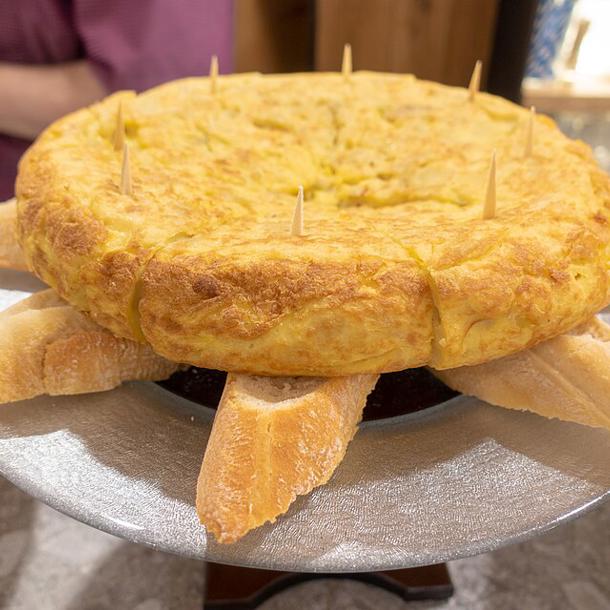
A Spanish tortilla is an omelette made with eggs and potatoes, often including onions. It is often served at room temperature as a tapa. According to legend, during the 1835 siege of Bilbao, Carlist General Tomás de Zumalacárregui invented the tortilla de patatas as an easy, fast, and nutritious dish to satisfy the scarcities of the Carlist army.
Ingredients
- 2 ½ cups extra virgin olive oil
- 3 medium Yukon Gold Potatoes, peeled and sliced to about ¼ inch thick
- 1 yellow or white onion
- 6 eggs, beaten
- 2 tsp crushed sea salt, divided
Instructions
- Add olive oil to a large skillet over medium heat
- Add potato and onion; they should be mostly covered with olive oil (add a little more oil if needed). Season with 1 ½ teaspoon sea salt. Cook on medium-high heat, maintaining a gentle boil, for 8-12 minutes, turning occasionally, until potatoes are just fork tender. Don’t overcook.
- Drain potatoes in a colander, reserving oil. Taste and season with more salt, if needed. Allow to cool for a few minutes.
- Meanwhile crack eggs into a bowl and season with about ½ tsp salt. Beat eggs together. Add potato and onion and toss to coat.
- Add a little bit of oil to the bottom of a 10-inch non-stick skillet over high heat. Once hot, pour potato mixture into it and cook on high heat for 1 minute. Reduce heat to medium-low and cook for about 5 minutes.
- Run a rubber spatula along the outer edges of the tortilla to make sure it’s not sticking and to help it form its shape.
- Once it starts to firm up around the edges and in the centre (although it will still be a little runny on top) place a large plate (larger than the size of the pan) over the pan and flip the omelette onto the plate.
- At this point, the cooked side of the tortilla de patatas should be facing up.
- Now gently slide the omelette back into the pan. Aim the back of the omelette to slide into the back of the skillet and use the spatula to help slide the rest of it off the plate and into the pan. Then use the spatula again to press the sides of the omelette in and under, to keep that rounded edge.
- Cook on high heat for 1 minute, and low heat for 2-3 more minutes or until done. It’s done when it feels set in the centre and a knife or toothpick inserted into the centre comes out clean.
- Flip the finished tortilla de patata back onto a plate, and serve. Serve warm or at room temperature and enjoy!
Recipe source: Easy Tortilla de Patatas - Tastes Better from Scratch
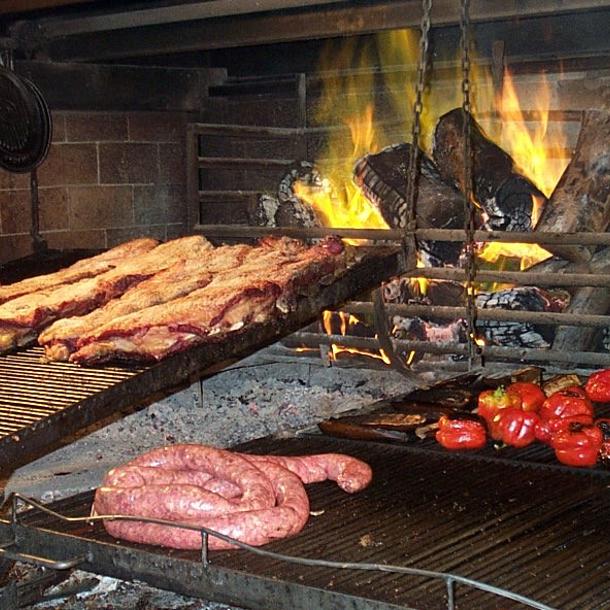
Asado is the technique and the social event of having a barbecue in countries such as Argentina and Uruguay where it is also a traditional event. An asado usually consists of beef, pork, chicken, chorizo, and morcilla, all of which are cooked using an open fire or a grill, called a parrilla. Usually, red wine and side dishes such as salads accompany the main meats, which are prepared by a designated cook called the asador or parrillero.
Ingredients
Asado:
- 2 lb top sirloin steak
- Sea salt and freshly ground black pepper to taste
- Bison tallow for cooking if using the stovetop
Chimichurri sauce:
- 5-7 tsp diced garlic
- 1 large bunch of parsley, roughly chopped
- 1 tbsp dried oregano
- 2 red chillies, finely chopped
- ¼ cup red wine vinegar
- 1 tsp sea salt
- Freshly ground black pepper to taste
Instructions
- Combine all the ingredients for the chimichurri together in a medium bowl. If time permits, do this several hours in advance to allow all of the flavors to meld and infuse into the oil before using. At a minimum, let it sit for 10 minutes before preparing the meat. It can be refrigerated for up to 24 hours in advance if desired
- Generously season the meat on both sides with sea salt and freshly ground black pepper. Let the meat come to room temperature for about 30 minutes before cooking
- Brush the chimichurri on the meat before cooking, or if desired, you can use it as a marinade and let the meat sit. For top sirloin steak, we recommend marinating for about 30 minutes to an hour (at room temperature) before cooking
- Cook the steak with either the asado method or on the stovetop. If using the stovetop, heat the bison tallow in a cast iron skillet over medium-high heat
- Cook for a couple of minutes on each side to create a nice, flavorful, seared crust. We recommend cooking the steak to medium rare for optimal flavour and texture
- Let the meat rest for approximately 10 minutes before serving. Spoon more chimichurri over the top and enjoy!
Recipe source: Argentinian Asado with Chimichurri Recipe - Spice World Inc
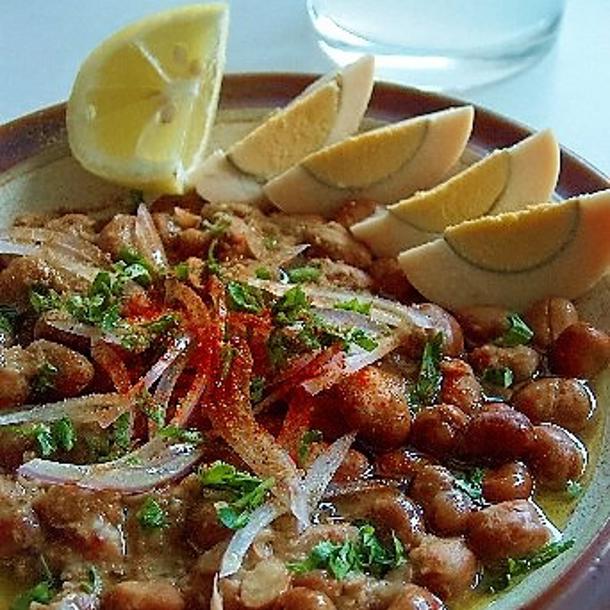
Ful medames is a stew of cooked fava beans served with olive oil, cumin, and optionally with chopped parsley, garlic, onion, lemon juice, chili pepper and other vegetables, herbs, and spices. It is traditionally made in and served out of a large metal jug. It is a staple food in Egypt and some writers have suggested that ful medames dated all the way back to Ancient Egypt.
Ingredients (serves 5)
- 2 cans plain fava beans, 13-15 oz each can
- ½ cup water
- Kosher salt
- ½ to 1 tsp ground cumin
- 1-2 hot peppers, chopped (jalapenos work here)
- 2 garlic cloves, chopped
- Juice of 1 large lemon
- Extra virgin olive oil
- 1 cup chopped parsley
- 1 tomato, diced
Instructions
- In a cast iron skillet or saucepan, add the fava beans and ½ cup water. Warm over medium-high heat. Season with kosher salt and cumin. Use a potato masher or fork to mash the fava beans
- In a mortar and pestle, add the hot peppers and garlic. Smash. Add in juice of one lemon and stir to combine
- Pour the garlic and hot pepper sauce over the fava beans. Add a generous drizzle of extra virgin olive oil. Top with chopped parsley, diced tomatoes, and a few slices of hot peppers, if you like
- Serve with pita bread, sliced tomatoes and cucumbers, green onions and olives. Enjoy!
Recipe source: Ful Mudammas (Egyptian Fava Beans) - The Mediterranean Dish
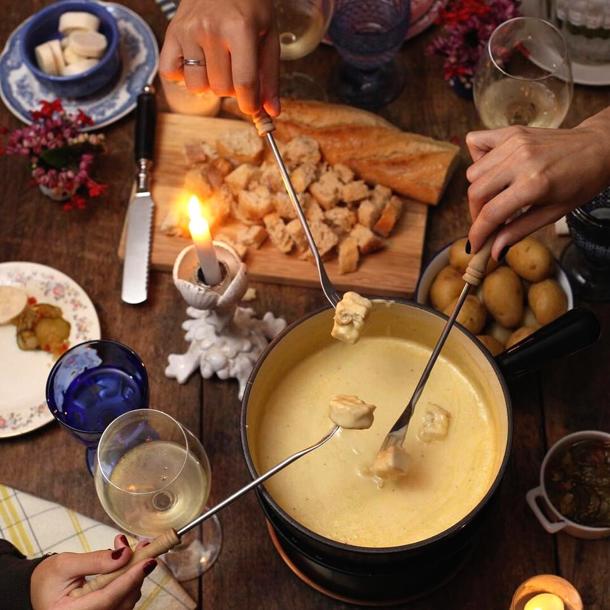
Fondue is a Swiss dish of melted cheese and wine served in a communal pot (caquelon or fondue pot) over a portable stove (réchaud) heated with a candle or spirit lamp, and eaten by dipping bread and sometimes vegetables or other foods into the cheese using long-stemmed forks. As a way to increase cheese consumption, it was promoted as a Swiss national dish by the Swiss Cheese Union (Schweizerische Käseunion) in the 1930s.
Ingredients (serves 5)
- 1 cup dry white wine
- 2 tbsp all-purpose flour or cornstarch
- ¼ tsp ground nutmeg
- ½ lb shredded Swiss cheese
- ½ lb shredded Gruyère cheese
- ¼ tsp salt
- 1 (1lb) loaf French bread, cut into 1 inch cubes
Instructions
- Bring wine to a simmer in a fondue pot over medium-low
- Stir in flour and nutmeg until well combined
- Add Swiss and Gruyère cheeses, ¼ lb at a time, mixing after each addition until cheese is melted. Season with salt
- Serve with cut-up French bread
- Enjoy!
Recipe source: Cheese Fondue Recipe
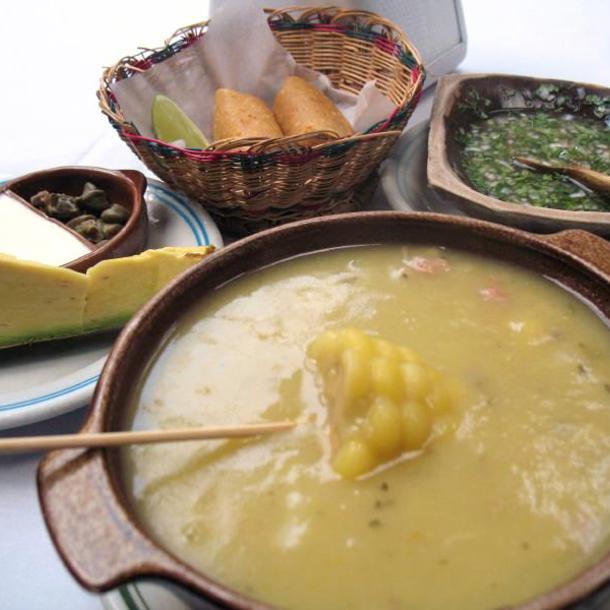
Ajiaco is a soup common to Colombia, Cuba, and Peru. Scholars have debated the origin of the dish. The dish is especially popular in the Colombian capital, Bogotá, being called ajiaco santafereño, where it is typically made with chicken, three varieties of potatoes, and the herb Galinsoga parviflora, known locally as guasca or guascas.
Ingredients (serves 6)
- 3 chicken breasts, skin removed
- 12 cups water
- 3 ears fresh cut corn, cut into 2 pieces
- Salt and pepper to taste
- 2 chicken bouillon cubes
- 3 scallions
- 2 garlic cloves, minced
- 3 tbsp chopped coriander
- 2 cups papa criolla (Andean Potato)
- 3 medium white potatoes, peeled and sliced
- 3 medium red potatoes, peeled and sliced
- ⅓ cup guascas
- 1 cup heavy cream for serving
- 1 cup capers for serving
Instructions
- In a large pot, place the chicken, corn, chicken bouillon, cilantro, scallions, garlic, salt and pepper. Add the water and bring to a boil, then reduce heat to medium and cook for about 30 to 35 minutes, until chicken is cooked and tender. Remove the chicken and set aside
- Continue cooking the corn for about 15 more minutes. Discard green onion and add red potatoes, white potatoes, and the guascas. Cook for 15 more minutes
- Uncover and add the frozen papa criolla and simmer for 15 minutes, season with salt and pepper
- Shred the chicken breast and return to the pot. Serve the Ajiaco hot with capers and heavy cream on the side
- Enjoy!
Recipe source: Ajiaco Colombiano (Colombian Chicken and Potato Soup) - My Colombian Recipes
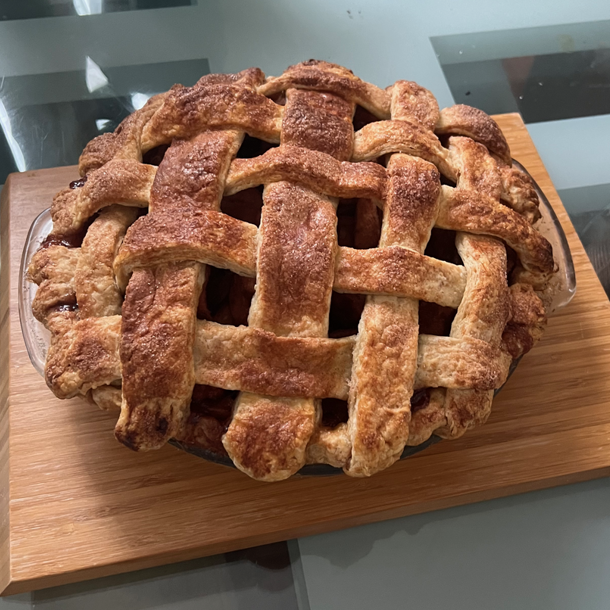
Apple pie in the US is often served à la mode, that is, topped with ice cream. In another serving style originating in 17th century England, a piece of sharp cheddar or Wensleydale cheese is placed on top of a slice of the finished pie. This practice also occurs in the United States and Canada, particularly in regions with dairy farms, such as New England.
Ingredients (serves 8)
- 2 (9") pie crusts
- 7 large Granny Smith apples, peeled, cored and sliced into ½ inch slices
- ½ cup granulated sugar
- ½ cup light brown sugar, loosely packed
- 2 tbsp all-purpose flour
- 1 tsp ground cinnamon
- ⅛ tsp ground nutmeg
- 1 tbsp lemon juice, plus the zest of half of a lemon
- 1 large egg, lightly beaten in a small bowl for egg wash
- 2 tbsp sanding sugar (optional)
Instructions
- Start by making or buying 2 (9") pie crusts, one for the bottom and one for the top of the pie
- Place oven rack in the centre position and preheat the oven to 204°C
-
In a large bowl, combine the sliced apples, granulated sugar, light brown sugar, flour, cinnamon, nutmeg, and lemon juice and lemon zest; toss to coat evenly.
- Remove the pie crust dough from the fridge and let rest at room temperature for 5-10 minutes. On a lightly floured surface, roll one disc into a 12" circle that is ⅛" thick. Carefully lay the crust into the bottom of a deep dish pie plate
- Spoon the apple filling over the bottom crust and discard juices at the bottom of the bowl. Roll out the second disc of pie crust until it is ⅛" thick and lay it over the apple filling
- Use a sharp knife to trim the dough along the outside edge of the pie plate. Lift the edges where the two pie crust meet, gently press to seal and fold them under. Rotate the pie plate and repeat this process until edges are neatly tucked under themselves. Cut 4 slits in the top of the dough to allow steam to vent. Place the pie on a baking sheet
- Brush the surface of the pie crust with the egg wash and sprinkle with sanding sugar. Cover the edges with a pie shield or a strip of foil to keep them from over browning during the first 25 minutes
- Bake at 204°C for 25 minutes. Carefully remove the pie shield, turn the oven down to 375° and continue to bake for an additional 30-35 minutes or until the top is golden brown and the juices are bubbly. Cool at room temperature for at least 3 hours
- Enjoy!
Recipe source: Easy Apple Pie Recipe (Just like Grandma Made!) - Little Spoon Farm
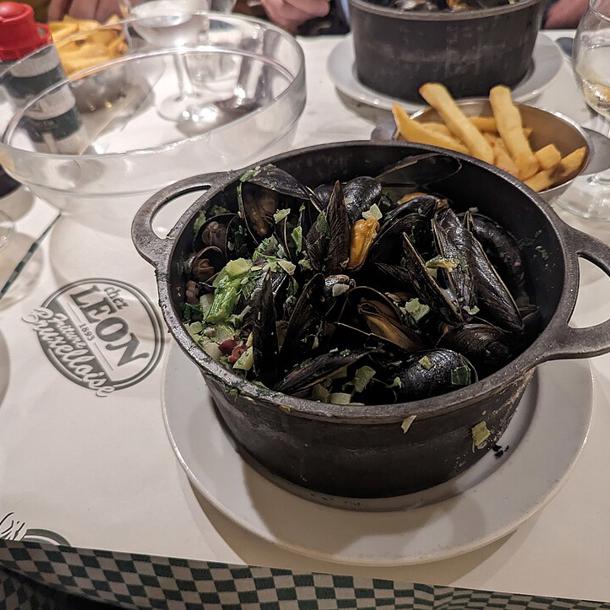
Moules-frites or moules et frites is a main dish of mussels and French fries. Although moules-frites are popular in many countries, it is thought that the dish originated in Belgium. On average, between 25 and 30 tonnes of mussels are consumed each year in Belgium as moules-frites.
Ingredients (serves 2)
- 1kg fresh mussels in shells
- 1 small onion, diced
- 2 cloves of garlic, minced
- 150ml dry white wine
- 1 tbsp creme fraiche
- 2 tbsp flat leaf parsley, chopped
- 2 large potatoes, peeled and cut into chips
- 3 tbsp plain flour
- ½ tsp cayenne pepper
Instructions
- Clean the mussels in cold water and scrub off the beards. Discard any opened mussels
- Heat a large pan with lid with olive oil and sauté the onions for 2 minutes then add garlic for 1 minute
-
Toss in the mussels and put on the lid and cook for 2 minutes and shake pan
-
Add dry white wine and cook for further 2 minutes
-
Scoop out all mussels and discard any that have not opened
-
Add creme fraiche to the pan and reduce by half
-
Add mussels and parsley back to the pan ready to serve
-
Heat oil for frying in a high sided pan
-
Peel potatoes and cut into chips
-
Mix the flour and cayenne pepper and toss chips in the mixture
-
Deep fry till golden and crispy
-
Toss cooked chips in some more pepper mixed with salt ready to serve
- Enjoy!
Recipe source: Moules Frites/Mussels with French Fries and Homemade Aioli - Larder Love