This week (Monday 18 – Sunday 24 May) is Dementia Action Week, an awareness campaign led by Alzheimer’s Society to bring people and organisation together to act on dementia.
1 in 3 people born in the UK today will go on to develop dementia in their lifetime, and every 3 minutes someone in the UK develops dementia.
What is dementia?
The word 'dementia' describes a set of symptoms that, over time, can affect memory, problem-solving, language and behaviour. Dementia can be caused by many different diseases. These diseases affect the brain in different ways, resulting in different types of dementia.
While Alzheimer's disease is the most common form of dementia, there are also other common types such as vascular dementia, Lewy body dementia and Frontotemporal dementia.
Some people develop multiple types of dementia; this is known as mixed dementia. It is also possible for a younger person to develop dementia. When a person develops dementia before the age of 65, this is known as young-onset dementia.
How dementia progresses
All types of dementia are progressive, meaning the structure and chemistry of the brain become increasingly damaged over time. How quickly dementia progresses depends on the individual. Each person is unique and experiences dementia in their own way.
It can be helpful to think of there being three stages of dementia:
- Early stage dementia is when a person has symptoms that are interfering with daily life but they can still manage to do many things by themselves, or with a little support.
- Middle stage dementia is when symptoms become more severe and wide-ranging. The person starts to need help with more basic tasks, such as washing, dressing, and going to the toilet.
- Late stage dementia is when a person starts to need more constant care, often provided by professional carers. It gets harder to do everyday tasks needed to stay well, such as eating, drinking and moving around.
How to support those around you living with dementia
There is no cure to dementia yet, but there are a variety of support and treatment options that can help to manage a person’s dementia symptoms – often alongside simple lifestyle changes like support service phone calls, visits and opportunities to connect with others.
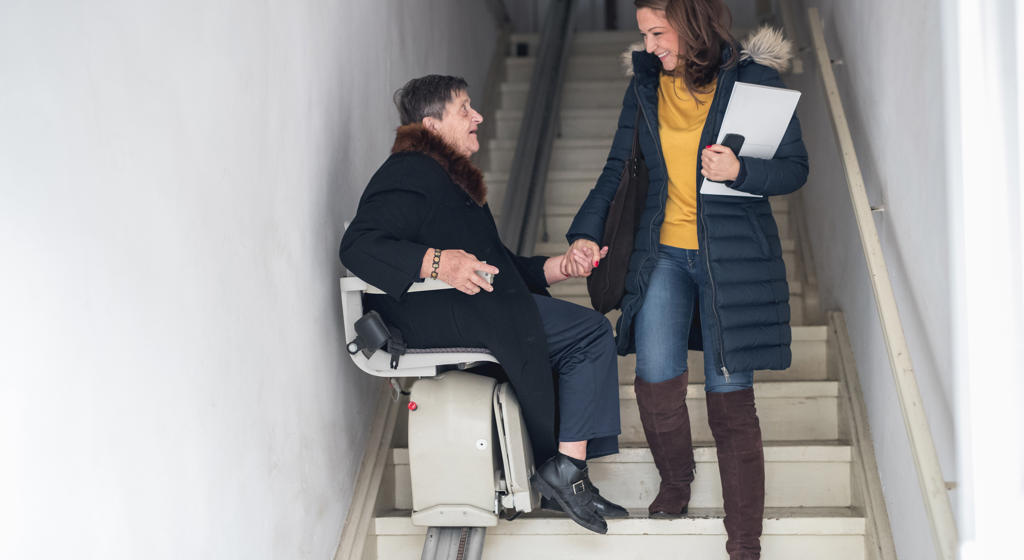
At PA Housing we look after a lot of extra care schemes. These are purpose-built homes where there is a need for care and/or support, the delivery of these support services forming part of the tenancy agreement. The staff managing these schemes often have backgrounds in care, so they are familiar with the different kinds of dementia and how to support residents showing symptoms.
Some ways we adapt our services to support those with dementia and reduce dementia risk:
- Colour has been found to influence memory performance by increasing focus and visual attention, so floors are colour-coded in our extra care schemes to aid residents in triggering those key memories
- Many of our extra care staff have taken part in Forget Me Not dementia training, specifically aiming to understand and improve the environment and wellbeing of people with dementia
- We regularly make sure that resident information forms held by our Service 24 team are up to date as it is important for them to understand appropriate questions to ask if dementia is present
- We have carried out presentations for residents and staff providing information on the importance of lasting power of attorney for residents with dementia and plan to roll these out across our general needs and independent living neighbourhoods
- We hold multiple weekly events requested by residents across our extra care schemes – from coffee mornings to Singing for the Brain to Alzheimer’s Society drop-ins
- Most importantly, we strive to always know who’s behind the front door of our homes so that whenever we recognise subtle changes over time, we can work with family and external support services to make sure they live well
There are always opportunities for us to learn how to improve our services and the support we provide for those living with dementia in our homes. We are eager to utilise case studies and resident input such as that from our Disability & Vulnerability working group to understand the best care pathways, especially for underrepresented groups in dementia research such as people of colour.
That’s why we’re so happy to support Dementia Action Week – please take a look at some links to resources below.
Aids and adaptions | PA Housing
External support links | PA Housing
Dementia Action Week | Alzheimer's Society
For the Public — Dementia Services Development Centre